
Helena Bioinformatics and Sofia University’s Faculty of Biology begin a joint programme in bioinformatics
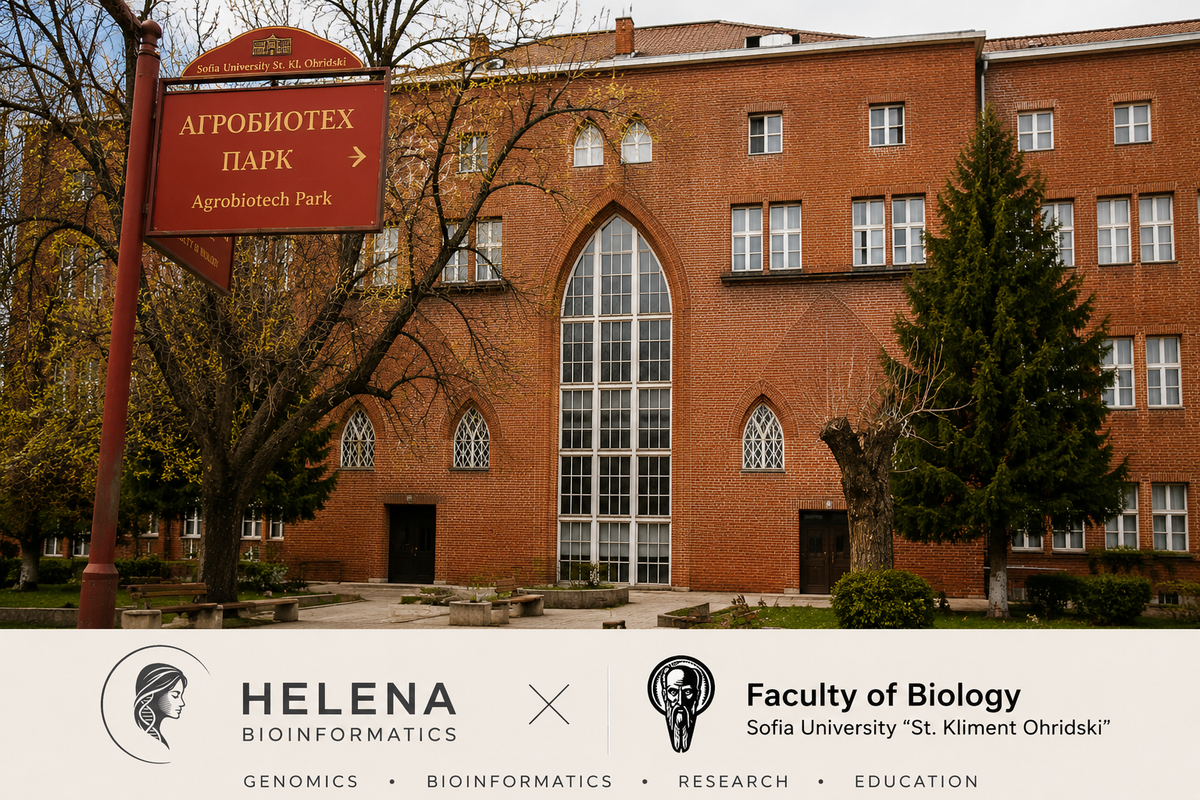
Building bioinformatics capacity through academic collaboration
Helena Bioinformatics will work with the Faculty of Biology at Sofia University “St. Kliment Ohridski” on research, education and the practical use of computational methods in the life sciences.
The Faculty brings expertise in genomics, molecular biology, metagenomics and biological data analysis. Helena brings software engineering, computational infrastructure and experience translating genomic methods into working systems.
The collaboration creates a shared setting for studying biological questions with computational tools that remain tied to the scientific problem, the data and the intended use.
Joint research with a practical route to implementation
The agreed scope includes genomic and metagenomic analysis, bioinformatics, molecular biology, artificial intelligence, biological data standards, reproducibility and the evaluation of digital methods used in life sciences and medicine.
The two organisations can form joint research teams, prepare project proposals and run pilot studies. This allows a research question to be examined at the biological, computational and operational levels within the same project.
For Helena, regular work with biologists and bioinformaticians is essential. Genomic software can be technically sound and still rest on the wrong biological assumptions, represent the data poorly or answer a question different from the one the researcher is asking. Bringing scientific and engineering work together makes those problems easier to identify before they become part of a larger system.
The Faculty gains access to an industry setting in which methods must continue to work after the first analysis is complete. Code must run on real data, produce outputs that another person can interpret and remain maintainable as software, dependencies and data formats change.
This creates a practical set of research questions: how biological data should be structured, how an analysis can be reproduced, how assumptions should be recorded and how a method behaves when it becomes part of a larger workflow.
Projects may lead to software, a pilot implementation, a publication or a negative result. Each outcome is useful when the research question is clear and the method can be examined.
A route into the field for students and young researchers
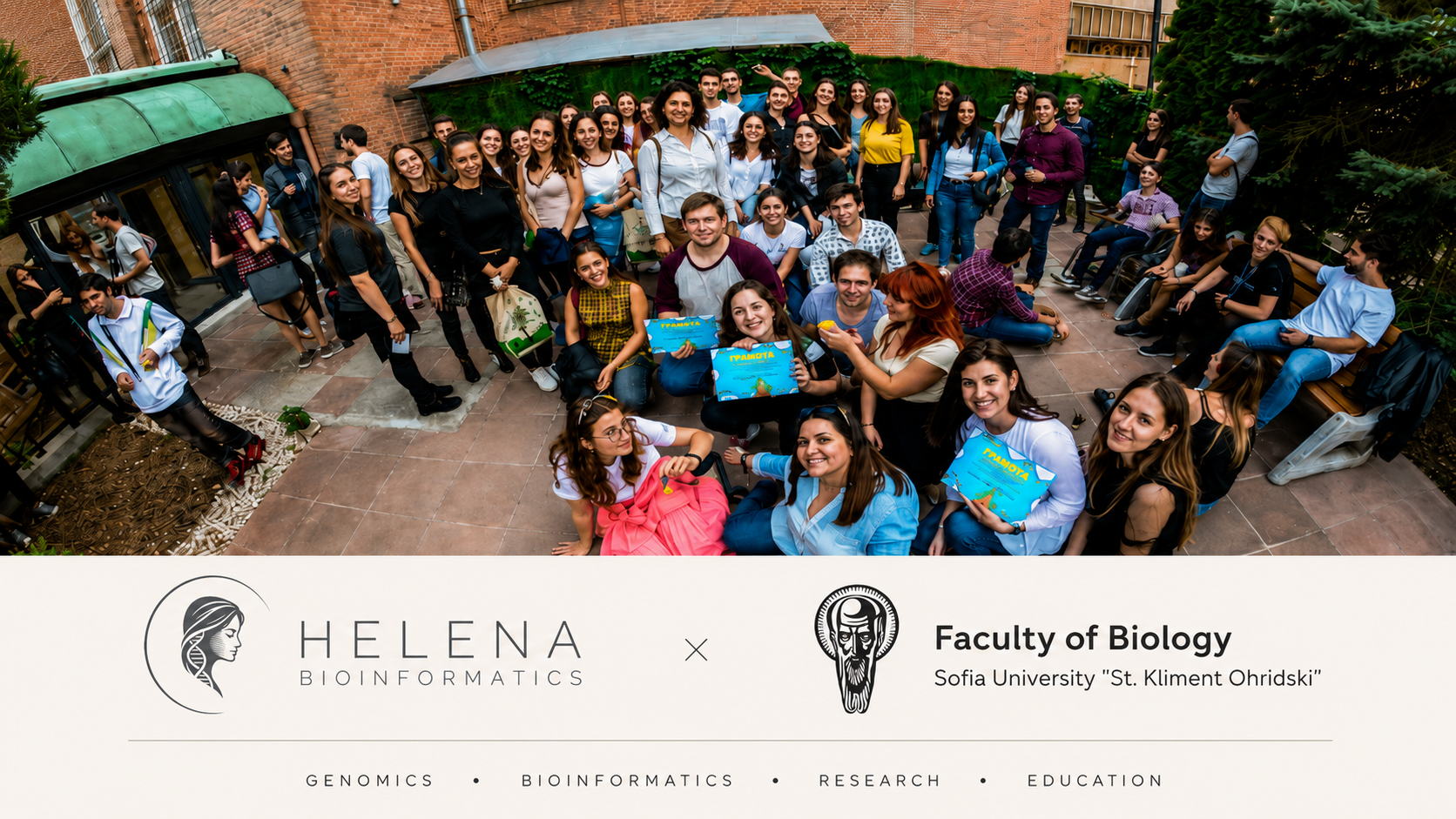
The partnership also creates a framework for internships, thesis work, doctoral research and defined project assignments.
Students need more than classroom examples to understand how bioinformatics is practised. Public datasets and teaching exercises are necessary, but they often remove the complications that shape real projects: inconsistent inputs, incomplete metadata, computational limits, software versions and the need to explain a result to another person.
A defined task with researchers and engineers gives students direct experience of those constraints. It also shows where biological interpretation depends on computation and where computational work depends on biological judgement.
For Helena, this is part of building long-term capacity. Bulgaria has a limited pool of experienced bioinformaticians and computational biologists. Expanding that pool requires practical projects, supervision and access to real scientific problems.
A useful student project needs a named supervisor, a bounded question, appropriate data and a result that can be reviewed. Internships should involve real work at a level suited to the student’s training. Thesis topics should be scientifically defensible and useful beyond the immediate needs of the company.
Why this matters in Bulgaria
Bulgaria has established strengths in biology, genetics, mathematics and computer science. Bioinformatics depends on all of them, but it requires places where these disciplines are taught and practised together.
Students need programmes, supervisors, infrastructure and projects that connect biology with computation. Researchers need collaborators who can build and maintain analytical methods. Companies need people who understand both biological evidence and software systems.
When these groups work separately, capability is lost between institutions. Biological data may be generated without enough local capacity to analyse it. Students may encounter bioinformatics late in their education. Researchers may depend on tools they cannot inspect or adapt. Companies may look abroad for skills that could be developed in Bulgaria.
The Helena–Faculty of Biology partnership creates one route for joint research and practical training in genomics and bioinformatics.
Its value will be visible in the work produced: the projects completed, the methods evaluated, the students trained and the research questions answered.
Image credits Faculty of Biology building and students at the Faculty of Biology, Sofia University “St. Kliment Ohridski”. Images courtesy of the Faculty of Biology, Sofia University.